
Paying Off Your Mortgage Cuts the $1,000,000 You Need to Retire
MarketDash Editorial Team
Author
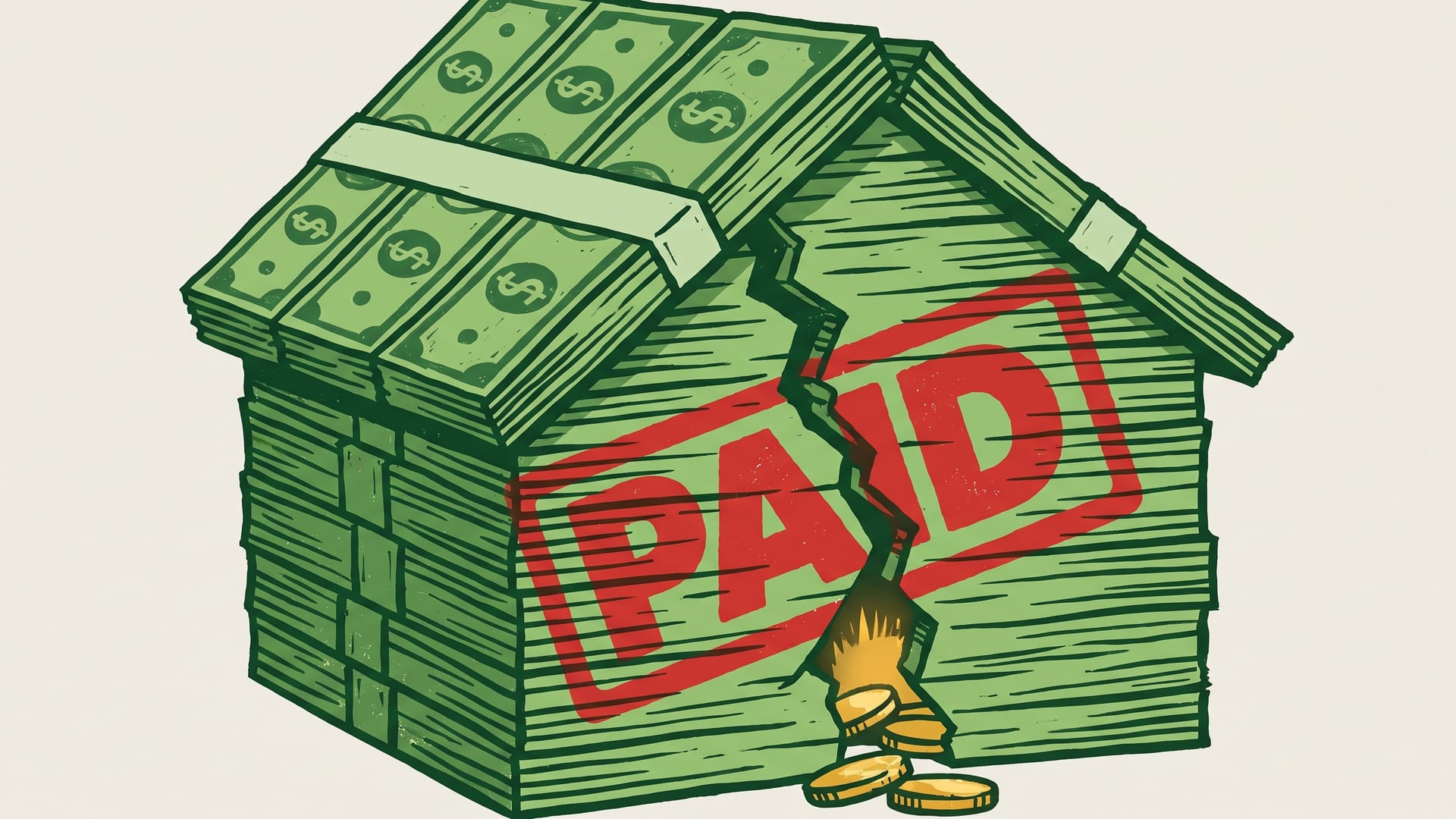
A paid-off house is a cost cut, not an investment
The best argument for writing that final mortgage check has nothing to do with what the house is worth. It is that you delete a bill. A paid-off house is the only bill you can remove and still live inside the thing you were paying for.
That matters more than it sounds, because the size of the portfolio you need is set by your spending. The 4% rule comes from research in the 1990s (William Bengen in 1994, the Trinity study in 1998): withdraw 4% of a stock-and-bond portfolio in your first year of retirement, raise the amount with inflation, and the money lasted at least 30 years in most historical periods. The shortcut is 25 times your yearly spending. Someone who wants $40,000 a year needs about $1,000,000. Shrink the spending, and the target shrinks with it.
The second win is calmer nerves. A mortgage payment arrives every month whether or not the market cooperates. A paid-off house does not flinch. If stocks fall hard in your first retirement years, you never have to sell investments at low prices just to make the payment.
Compare two rates, not two feelings
Paying off a loan at a set rate is the same as earning that rate, guaranteed, with no market risk. So the decision comes down to two numbers: the rate on your mortgage, and the return you could realistically earn on that money after taxes and fees.
Write them down side by side. If your mortgage rate is higher, the payoff wins and you should probably do it. If your rate is lower than a boring, blended return you actually expect over decades, you are being paid to keep the loan.
Do not stack your mortgage against the best year your cousin had in one stock. And use the rule of 72: divide 72 by a yearly return to estimate how long money takes to double. At 8% a year, that is about 9 years. Money you send to the bank stops doubling. For a feel of what compounding does when left alone: $500 a month for 15 years at 7% a year, before taxes and fees, ends at about $158,000, on about $90,000 of your own money. The extra $68,000 is the machine you switch off.
That is not an argument for keeping the mortgage. It is an argument for making the rate comparison honest instead of hopeful. Mortgage interest may be partly deductible, which lowers your true cost; if you do not itemize, it usually is not. Get your own answer from a tax preparer.
The dollars matter more than the decision
Writing the final mortgage check feels like graduating. The diploma is a building that cannot buy groceries.
Here is how people wreck a good idea. They gather every investable dollar, add a chunk of the retirement account, and write one heroic check. Then the roof fails, and they own a paid-off house with no cash.
Keep a cash cushion, sized in years of spending rather than optimism, so a bad stretch never forces you to sell investments or borrow at credit card rates. Home equity is a wonderful number and a terrible currency: you cannot pay a plumber with a spare bedroom.
Then check where the money comes from. Taking money out of a traditional IRA or 401(k) before age 59½ usually means income tax plus a 10% penalty, with some exceptions. If the payoff requires that, you have traded a mortgage payment for a tax bill and a penalty, which is a bad trade dressed up as thrift. Roth dollars are funded with money that was already taxed and come out tax-free in retirement, which makes them the most valuable dollars you own and the last ones you should hand to a bank.
Best case: pay with new money. Send your monthly savings to the loan during your last working years, so you keep flexibility, keep the cushion, and never touch retirement accounts.
Inflation quietly picks a side
At 3% inflation a year for 15 years, something that costs $40,000 ends up costing about $62,000, and $40,000 kept in cash buys only what about $26,000 buys. Two lessons fall out of that.
A fixed mortgage payment gets easier to carry in real terms every year, because the dollars you pay it with are worth less. And your retirement spending number will not be the one you wrote down. A paid-off house protects you from one specific price: the cost of housing. It does nothing for property taxes, insurance, repairs, or groceries, and those rise too. Which is the whole argument for doing this with a cushion, not with everything.
Your next step: three numbers on one page
Write down your mortgage rate, the after-tax return you honestly expect from a boring mix of stocks and bonds after fees, and your yearly spending with and without the mortgage payment. Compare the two rates. Then check whether your cash cushion survives the payoff.
If your rate is higher and the cushion survives, pay it off with new savings and enjoy the quiet. If your rate is lower, keep the loan and keep investing. An affordable fixed mortgage is the cheapest flexibility most people will ever buy.
Get Market News Alerts
Real-time alerts on price moves, news, and trading opportunities.
Join 20,000+ investors. No spam, ever.
Featured Articles
View all news
Musk Confirms SpaceX-Tesla Merger Committees, Says Deal Would Be 'A Good Idea' But No Sure Thing

SpaceX Q3 Earnings: Revenue Jumps 161% as AI Segment Goes Parabolic

Super Micro Computer Stock Jumps After AI Demand Fuels Massive Q1 Guidance Raise

Capital One Crushes Q3 Estimates as Discover Deal Pays Off

United Airlines Q3 Earnings Miss Estimates, Stock Slips After Hours

3M Just Raised the Bar: Earnings Beat, Guidance Hike, and a Data Center Twist

Salesforce Snaps Up Braze for $5.66B, and the Stock Is Doing Exactly What You'd Expect